Light for Sale: Reframing the Data Center Community Impact as a Power and Trust Problem

His recent work examines the broader socioeconomic consequences of artificial intelligence, including labor markets, public finance, demographic change, institutional adaptation, and the distributional effects of technological progress.
He holds a PhD in Mathematical Finance from Boston University, and previously earned an MSc in Finance and Economics from the London School of Economics. He completed his undergraduate studies in Economics at Seoul National University under the Korea Foundation for Advanced Studies scholarship program.
Published
Modified
AI data centers are straining local power systems
Donations cannot replace enforceable community agreements
Real benefits require binding commitments to the grid
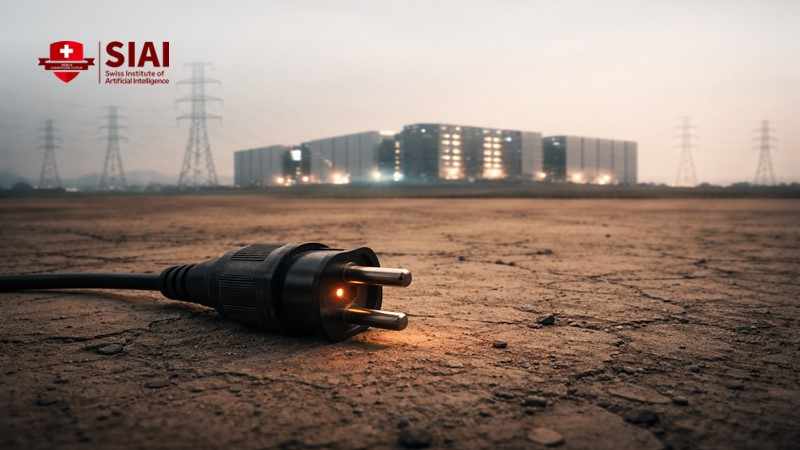
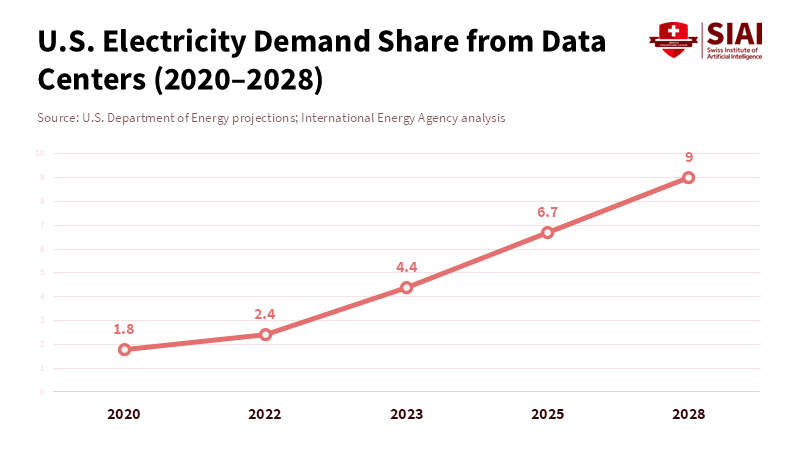
In 2023, U.S. data centers consumed about 4.4% of the country's electricity. Some predict this will go up a lot in the next five years. Now, 4.4% might not sound like much, but it's enough to make any mayor, school head, or utility company think hard about those energy bills and possible power shortages in the winter. Here's the thing: when companies build these huge AI data centers, they're not merely setting up servers. They're changing the local energy landscape, the town's negotiating position, and public trust in the system. So, those donations to schools, promises of jobs, and fancy community events? They're nice, but they don't replace solid, legally binding agreements that address energy and the community's needs directly. If we keep treating these donations as the only factor in data center community impact, we're letting private deals obscure risks everyone shares. This is about changing the way we talk about this issue. Community benefits are important, but only if they're tied to clear, verifiable commitments on energy, jobs, and governance. This way, we protect regular people from being left in the dark.
Why Charity Isn't Enough
We all know the usual routine: A big company promises money for schools, says they'll train local people, and maybe builds a nice public space. These things do help. Schools get stuff, some people get jobs, and some groups get more money. But these are often one-time things that don't really solve the main problem: the huge amount of electricity needed to run AI and the decisions about how to reliably get that energy. In the U.S., data centers are using more and more electricity. It's more than a possibility anymore. Government reports and international energy groups all show that this demand is going way up. When we treat community benefits as just for show, rather than as legally tied to energy outcomes, we're making a deal where the community takes on the risks while the companies get good publicity. This difference between what looks good and what's really required is the main thing we need to fix.
What happens because of this? Places with many AI data centers experience higher energy demand, less available energy, and higher prices when there are issues with energy delivery or fuel. Energy companies and studies warn of real risks: winter peaks, cold weather, and fuel shortages can disrupt the system when these large new energy users come online. The usual response – thank-you ceremonies and awards – doesn't do anything to make more electricity, improve energy delivery, or create reserve energy options. A real data center community impact plan connects those gifts to long-term investments that change the energy supply: promises of energy capacity, on-site energy generation with strict rules about pollution and reliability, and legal support for energy grid upgrades. These are very different from just handing out donations.
Looking at the Money Behind the Gifts
To create enforceable deals, we must understand the costs and what matters in negotiations. Building an AI data center can cost hundreds of millions, sometimes over half a billion, for a typical-sized facility. Equipment, especially high-powered computer processors and energy infrastructure, is a high cost up front.
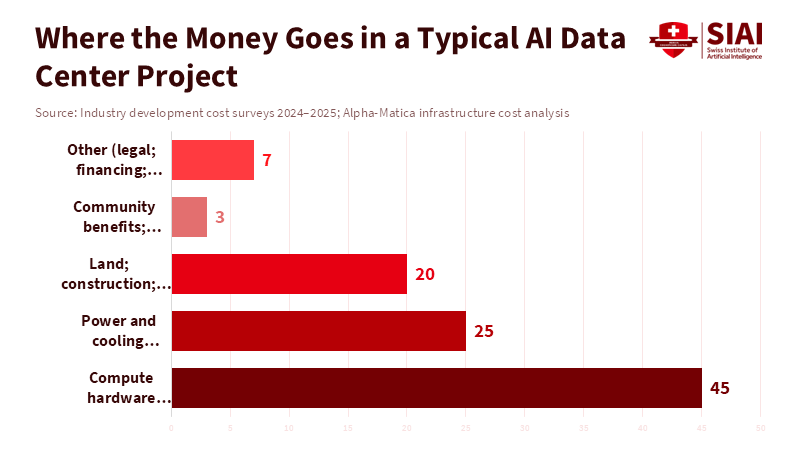
That's why companies talk about local benefits: jobs and donations are cheap compared to long-term investments in energy. But these gestures can't replace what the community needs to keep the lights on. When a data center needs new energy sources or major upgrades to the energy grid, the community has to wait years for approvals and construction before it sees any benefit. And the community's trust is easily broken if the only visible benefits are temporary and cannot be enforced.
Smart community benefit agreements can change this situation. Instead of accepting a one-time payment for approval, local governments should require commitments contingent on specific conditions: starting operations only when the energy grid is ready, contributing to energy delivery or generation, and clear job-training programs with defined employment and wage targets.
This changes who the community is in the data center community impact, from people who watch the PR to people who sign contracts with the right to check on things. It's important to remember that many companies don't have unlimited money. Hardware costs and financial cycles limit their cash. That means getting creative with money – using public and private funds, long-term energy contracts, or even local bonds – can assist in bridging the gap while keeping the risks public and the benefits enforceable.
Governance, Fairness, and the Energy Grid
Saying that community benefits should be part of a contract isn't simply a technical thing. It's concerning fairness. Voluntary donations often go to visible places – schools, parks, sports fields – while less obvious problems happen elsewhere: small businesses paying higher rates, renters living near power stations, or communities dealing with construction issues.
Binding agreements can specify how benefits are shared, require community monitoring, and fund investments that reduce local risks, such as helping people make their homes more energy-efficient or providing targeted assistance with energy bills. The more that deals link company actions to scheduled grid improvements, the less likely it is that a whole area will have to cut back on energy use to keep the system working. This puts the community at the center of the discussion, not on the sidelines.
To make this happen, companies, energy providers, and local leaders need to share responsibility for planning over longer periods than companies usually plan. Data center community impact means creating new systems: regional groups that include community representatives, monitoring systems that can be enforced, and rules that stop operations if energy reliability goals aren't met. These aren't unusual things. They're similar to environmental or labor agreements used in other areas. Using them here would turn donations into tools that lock in investments in energy capacity and reliability. In short, charity becomes powerful when it's combined with enforceable engineering.
Addressing the Criticisms: Profit, Speed, and Competition:
Two common complaints will come up. First, this will slow investment and cost jobs. Second: Tougher deals will send projects to other countries or more friendly states during the AI boom. Both deserve honest answers. According to a report from Solar Power World, nearly 2,600 gigawatts of new power generation and energy storage are now seeking grid interconnection across the United States, showing that setting permit requirements in stages that align with business schedules and ensuring that grid upgrades are on track can help protect jobs and communities while supporting project progress. It ensures that the benefits occur at the same time as the impacts.
On the second point, the notion that any U.S. restriction will cause us to lose ground to competitors is exaggerated. The world needs secure, well-regulated data centers, and that favors places that combine reliability with clear rules. Investors want predictability, and communities want certainty. A report from Data Center Watch notes that in the past three months alone, 20 data center projects worth $98 billion faced delays or blockage due to local opposition. This highlights the importance of reducing political risk through careful planning and addressing community concerns to improve the chances of long-term project success.
There's also a technical argument that companies often use: We'll solve this with on-site gas generation or batteries. Many companies are using on-site fuels or combined ways to meet immediate needs. This can reduce short-term stress on the grid, but it can also increase pollution if natural gas is used without strict limits. Recent reports indicate that more people are using natural gas for short-term reliability, raising environmental concerns that communities must consider. Good community benefit agreements include conditions about pollution and efficiency, and a clear plan for adding renewable energy and storage as the energy grid improves. The goal isn't to ban all temporary solutions, but to make them conditional, transparent, and connected to progress toward cleaner energy.
A Policy for Light and Trust
If 4.4% seems abstract, imagine a winter evening when the city asks people to use less electricity because a few new data centers are using a lot of power. That's the risk we take when we stop the conversation at charitable giving. A real data center community impact policy treats benefits as binding agreements that protect public resources and share the benefits fairly. Cities and counties should require operations to happen in stages based on verified grid upgrades, demand financial plans which support long-term energy capacity, and insist on governance systems that give residents the right to check on things and have real ways to fix problems.
To be clear: donations, training programs, and community projects are good things. But they only become fair when they're part of enforceable agreements that precede, not follow, company operations. We can welcome new ideas without losing power. The choice isn't between jobs and reliability. It's between careful, enforceable partnerships and the slow loss of citizen trust when charity tries to fill the gaps that infrastructure investment should cover. Let's create rules that make the benefits of AI real and lasting, not just a show.
The views expressed in this article are those of the author(s) and do not necessarily reflect the official position of the Swiss Institute of Artificial Intelligence (SIAI) or its affiliates.
References
Department of Energy. (2024). DOE Releases New Report Evaluating Increase in Electricity Demand from Data Centers. U.S. Department of Energy.
International Energy Agency. (2024). Energy and AI: Energy Demand from AI. IEA.
Lancaster City. (2025). Lancaster AI Hub: Community Benefits Agreement (Draft). City of Lancaster (PA).
National Association for the Advancement of Colored People (NAACP). (2026). Community Benefits Agreement Template. NAACP.
Reuters. (2026, January 28–29). Forecast record electricity demand to test largest US power grid; US faces growing risks of power outages due to rising winter demand, changing fuel mix. Reuters.
Cleanview / Axios reporting. (2026, Feb). The AI boom is making natural gas great again (analysis of planned on-site power equipment).
Cushman & Wakefield. (2025). Data Center Development Cost Guide 2025. Cushman & Wakefield.
Industry market reports on GPU and data center equipment costs (2024–2025), including market surveys and pricing guides.
His recent work examines the broader socioeconomic consequences of artificial intelligence, including labor markets, public finance, demographic change, institutional adaptation, and the distributional effects of technological progress.
He holds a PhD in Mathematical Finance from Boston University, and previously earned an MSc in Finance and Economics from the London School of Economics. He completed his undergraduate studies in Economics at Seoul National University under the Korea Foundation for Advanced Studies scholarship program.
Similar Post