Why an EU federation is the Only Real Way to Build Bigger, Competitive European Firms

Ethan McGowan is a Professor of AI/Finance and Legal Analytics at the Gordon School of Business, SIAI. Originally from the United Kingdom, he works at the frontier of AI applications in financial regulation and institutional strategy, advising on governance and legal frameworks for next-generation investment vehicles. McGowan plays a key role in SIAI’s expansion into global finance hubs, including oversight of the institute’s initiatives in the Middle East and its emerging hedge fund operations.
Input
Modified
Europe’s problem is not a lack of firms, but a system that keeps them small
An EU federation is best understood as industrial infrastructure, not constitutional ambition
Without enforced market integration, Europe will keep exporting its champions instead of building them

The business world in Europe has a strange shape. About 99% of companies in the EU are tiny. Only a tiny fraction, less than 0.025%, is significant when you count employees. But these few large companies create about half of all business value and provide over a third of all private-sector jobs. This uneven structure helps explain why Europe isn't as productive or as strong in important industries as other countries.
Thinking about a stronger, more united EU isn't simply about making grand political statements. It's about finding a practical way to fix the problems that keep European companies from growing. Right now, different rules and regulations across countries make it hard for companies to expand. This can discourage growth and leave Europe vulnerable in global supply chains. The real question is whether we can create an EU system that encourages companies to grow by creating the right legal, financial, and commercial conditions. It's not only about having more meetings; it's about making fundamental on-the-ground changes that will enable bigger companies to grow.
Seeing a Stronger EU as a Way to Help Industries
Usually, people talk about a more united EU as a big political goal. We should think about it as a tool to help our industries. It's a way to create consistent rules and combine resources, thereby encouraging companies to grow. The main problem is the way things are set up. The fact that there are so many small companies across the EU isn't just a matter of tradition. It's because there are so many different sets of rules – different tax laws, bankruptcy procedures, financial markets, and ways of enforcing the rules of the single market. All this raises the cost of hiring more people. The numbers show this clearly: there are tons of micro and small companies, but only a few large ones produce most of the goods and services.
This is important now because competition with the US and China rewards being big. Without a way to reduce the costs of cross-border expansion, Europe will continue to lose successful companies to other countries and will be unable to build world-leading companies. The idea is simple but effective: a stronger EU should be seen as a way to transform the business world so that growth becomes the standard rather than a considerable struggle. The kind of stronger EU we're talking about should be focused and practical. It should concentrate on three things that really affect how big companies can get:
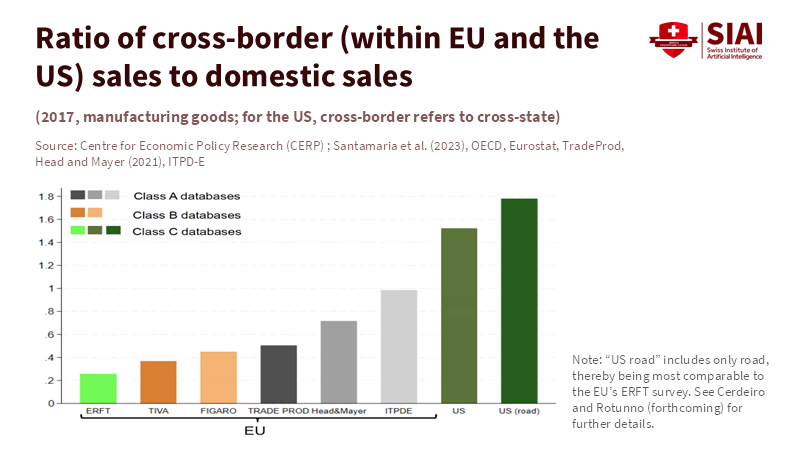
- Consistent corporate and bankruptcy laws: This would make it less risky for companies to expand into other countries.
- Shared financial resources: This would support significant investments and reduce the risks of big industrial projects.
- Unified financial markets: This would make it easier for growing companies to get the money they need, no matter where they are in the EU.
These are the same tools that turned separate economies into unified markets in the past. The Zollverein, the German customs union in the 19th century, shows the way aligning tariffs, sharing policies with other countries, and creating a few key organizations can lower trade costs and encourage companies to expand across what were once separate states. The important thing about the Zollverein is that it shows the value of cohesion lies mostly in establishing the right systems. If you lower transaction costs once, companies can grow many times over afterwards.
What the Numbers Tell Us About Size and Productivity
The evidence is clear. Eurostat says there are about 32 million businesses in the EU. Most of these are micro- and small-sized companies, whereas only a few are medium- or large-sized. However, these larger companies generate much more value and create more jobs. Lately, productivity in the Eurozone hasn't been great. Some estimates show it dropped in 2023 and hasn't recovered since. Places with larger companies and stronger financial markets tend to have higher productivity and better growth. We examined official data from Eurostat and the OECD and used careful estimates when data were missing. When we had gaps in the data, we averaged 2022-2024 and used simple math to fill in the blanks only when we didn't have monthly or quarterly data. This provided reliable estimates rather than making wild guesses.
Three key numbers support our point. First, almost all companies are micro or small. This indicates that numerous companies could grow, but the systems that would enable them to do so aren't in place. Second, the small number of large companies creates almost half of all business value. This means that when companies do manage to grow, it pays off big time, but it's rare for them to get to that size. Third, productivity growth in the Eurozone slowed in 2023, slowing the recovery. All this shows that we need to help more companies get big enough to fund research and development, enter global markets, and build strong supply chains. If we don't create systems that reduce the costs of cross-border expansion, the EU will have to rely on only a few companies succeeding, rather than on a system that helps many companies grow.
Lessons from the Past and Present
Looking at the Zollverein isn't just about remembering the past. It's about finding models for building better systems. The Zollverein abolished tariffs among German states, established uniform tariffs on goods from other countries, and created mechanisms to allocate tax revenue to support infrastructure and trade. This was important because it changed how businesses thought about expanding across multiple states. Today, the problem isn't tariffs. It's the different rules, regulations, and financial systems in each country. Mario Draghi and others have said that Europe needs to do more than patch things up. It needs to build a real system for managing money and supporting industries. The idea is the same: when you combine rules and resources, markets become stronger, and companies can escape the too small to grow trap.
But the political situation is different now. The Zollverein worked because the economies were similar and the political leaders could make changes. Today, the EU comprises democracies with varied languages, work traditions, and political ideas. Some people worry that rules made in Brussels won't change how businesses work in each country. Evidence suggests that these rules can have some positive effects. When there are well-defined rules and ways to enforce them – like the rules for goods in the single market and the Digital Markets Act for internet platforms – companies change their behavior because it saves them money and gives them access to more markets. So, we should think of a stronger EU as a collection of well-designed organizations that can be enforced, rather than as a single significant political leap. We can learn from the Zollverein and make a stronger EU possible without forcing everyone to be the same.
How a Stronger EU Could Help Companies Grow
To make a stronger EU that helps companies grow, we must be smart about how we design it. First, we need to make corporate and bankruptcy laws consistent across the EU. This will make it easier for companies to merge, acquire other companies, and create subsidiaries in different countries. These changes will make operations more predictable and reduce the cost of doing business across multiple countries. Second, we should create a shared EU-level fund or investment program to support projects that help companies grow. This shouldn't be general financial assistance; it should be strategic funds that attract private investment. Third, we need to complete the Capital Markets Union by harmonizing stock and bond issuance rules, enabling cross-border clearing, and standardizing how companies borrow. This way, a company in Lisbon can get funding as easily as one in Paris or Berlin.
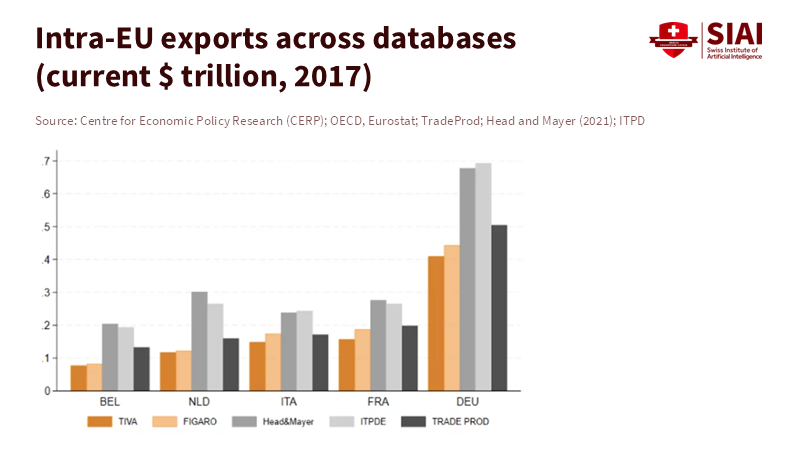
These are practical changes that will directly help companies grow. Consistent rules lower transaction costs, shared capital provides long-term funding, and integrated markets create opportunities for companies to sell and provide guidelines that encourage owners to grow rather than sell. Some people worry that sharing financial resources and risks will create problems, or that making rules consistent will eliminate local preferences. These are real risks, but they can be managed. We can limit problems by setting strict conditions and requiring companies to share the costs. We can also make rules consistent while still permitting some local labor protections and eliminating the legal limitations on company growth. This is like building infrastructure that helps companies reach a size where they can compete globally.
Handling Concerns and Objections
The biggest concerns are usually these: First, differences in culture and language can make integrated markets difficult. Second, implementing changes from Brussels can be difficult, and the process can be slow. Third, people may oppose the goal of European integration if they feel they are losing control. Each of these objections can be addressed through clear, well-planned policies. On culture: companies will adapt when it makes economic sense. Evidence from multilingual countries and companies that operate across Europe shows that business practices change in response to market incentives. On implementation: the EU doesn't have to centralize everything at once. It can start by implementing consistent rules in specific areas (like corporate law) with explicit timelines and sunset clauses to demonstrate the benefits. On popular support for EU regulations: they must be accompanied by clearer ways to be fiscally accountable. For example, have a dedicated European investment budget with parliamentary control and transparent requirements. That helps connect national voters with the benefits of company growth.
When discussing precise sovereign-level political preferences, we rely on public statements and recent policy reports to map consensus. When precise figures (e.g., fiscal multipliers) are not uniform across studies, we state ranges and favor conservative midpoint estimates to avoid overclaiming.
The fact that small companies dominate Europe's business world isn't just an interesting detail. It explains why Europe isn't as strong as it could be. A stronger EU, created as legal infrastructure – consistent laws, shared financial capital, integrated capital markets – is the most direct way to encourage companies to grow. This isn't simply a political wish. It's a set of changes that may lead to measurable results: more companies above the growth threshold, more domestic investment, and higher productivity. The alternative is that talented companies will continue to sell to other countries, essential industries will decline, and crises will only temporarily expand EU power. We don't need everyone to speak the same language or have the same laws to succeed. We need to reduce the costs of cross-border expansion and give companies a reason to grow here rather than elsewhere.
Lawmakers ought to begin by implementing pilot programs focused on a few key legal and financial issues. Show what works. Expand those programs. Connect these programs to democratic oversight to strengthen competitiveness and support within the population. The lesson from the Zollverein is clear: when trade rules and financial tools are aligned, markets grow, and companies expand. Today, joining together can do the same — if it's seen as a way to build bigger, more competitive European companies.
The views expressed in this article are those of the author(s) and do not necessarily reflect the official position of the Swiss Institute of Artificial Intelligence (SIAI) or its affiliates.
References
Eurostat. 2024. “Micro & small businesses make up 99% of enterprises in the EU.” Eurostat News Release, 25 October 2024.
Eurostat. 2023. “SMEs and employment: medium-sized enterprises employment and value added.” News release, 9 November 2023.
F. Plöckl. 2019. “The Zollverein and the Origins of the Customs Union.” University of Adelaide Working Paper.
Financial Times. 2026. “Mario Draghi calls for EU 'federation' to avoid being 'picked off' by US and China.” Financial Times, February 2026.
OECD. 2025. “OECD Compendium of Productivity Indicators 2025.” Organisation for Economic Co-operation and Development, 2025.
Economy.ac. 2026. “Without a federation, there is no competitiveness — Europe's call.” Economy.ac, 3 February 2026.
EBSCO (Research Starters). “German Customs Union | Zollverein.” (Research starter summary on the historical Zollverein.)
Ethan McGowan is a Professor of AI/Finance and Legal Analytics at the Gordon School of Business, SIAI. Originally from the United Kingdom, he works at the frontier of AI applications in financial regulation and institutional strategy, advising on governance and legal frameworks for next-generation investment vehicles. McGowan plays a key role in SIAI’s expansion into global finance hubs, including oversight of the institute’s initiatives in the Middle East and its emerging hedge fund operations.