How Voting Rules Drive Migration Politics — and Why Schools, Firms and Cities Should Care

Ethan McGowan is a Professor of AI/Finance and Legal Analytics at the Gordon School of Business, SIAI. Originally from the United Kingdom, he works at the frontier of AI applications in financial regulation and institutional strategy, advising on governance and legal frameworks for next-generation investment vehicles. McGowan plays a key role in SIAI’s expansion into global finance hubs, including oversight of the institute’s initiatives in the Middle East and its emerging hedge fund operations.
Input
Modified
Plurality voting systems amplify narrow anti-immigration platforms
The resulting policies accelerate outsourcing and automation, weakening local jobs
Institutional reform is key to breaking this self-reinforcing cycle

In numerous European elections, the outcome of mayoral races and the formation of national governing coalitions often hinge on a relatively small number of votes. A subtle variation in election rules—specifically, whether a simple plurality or an absolute majority is required to win—can predictably influence political incentives. In electoral systems where a plurality is sufficient for victory, a party or candidate can secure office by appealing to a narrow, highly focused segment of the electorate. This dynamic makes single-issue platforms, particularly those centered on anti-immigration sentiments, particularly potent. Conversely, when a majority is mandated, candidates are compelled to construct broader coalitions and moderate their stances to appeal to a wider range of voters. This seemingly minor detail in electoral structure is not merely an abstract concept; it significantly shapes the array of policy options on migration, influences business location decisions, and subtly reshapes the labor market that educational institutions and training programs must adapt to.
The Interplay Between Electoral Systems and Immigration: The Impact of Voting Rules on Political Outcomes
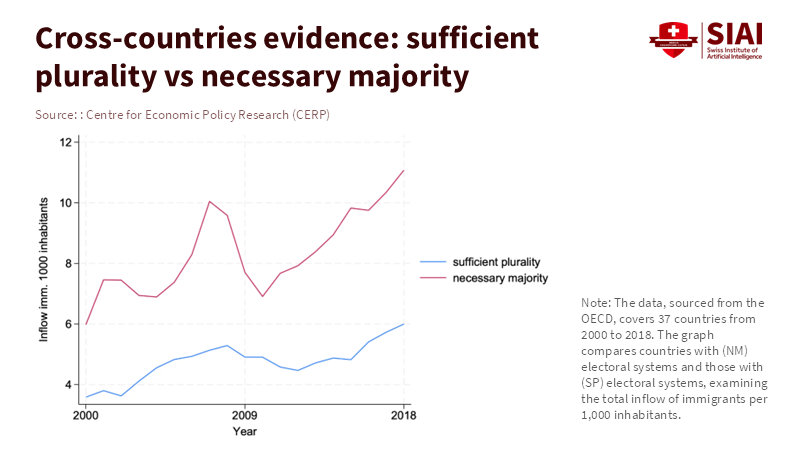
Electoral systems serve as more than just neutral conduits for public opinion. They play an active role in determining which voices gain prominence and which policy proposals gain traction in the political arena. Under a simple plurality system, often referred to as first-past-the-post, which is becoming increasingly common in local multi-party elections, a party can govern if it emerges as the largest single entity. This reward system incentivizes parties to adopt a narrow, highly mobilizing message to appeal to a specific voter base. Anti-immigration rhetoric aligns seamlessly with this strategy, requiring only a dedicated core of supporters to achieve victory. In contrast, systems that require an absolute majority or employ two-round runoff elections compel candidates to broaden their appeal. These systems foster strategic behavior, such as tactical withdrawals, cross-ideological alliances, and vote pooling in subsequent rounds. The practical result is that institutional design channels the same electorate toward divergent policy outcomes. In settings where plurality prevails and the party system is fragmented, exclusionary immigration platforms encounter a lower threshold to gain political power. Where majority requirements or effective coalition-building mechanisms are in place, these platforms must dilute their message to resonate beyond a narrow base of support.
This mechanism clarifies certain patterns that might otherwise seem perplexing. Countries that feature numerous political parties and plurality voting systems often exhibit higher vote shares for radical right-wing groups than what public opinion surveys would suggest. This phenomenon is not simply a matter of ideological incongruence; rather, it stems from the incentives inherent in the electoral system. When parties have the opportunity to seize power with the backing of a single, attentive bloc of voters, they lack motivation to sacrifice short-term mobilization gains for broader appeal. In situations where runoffs or coalition thresholds make minority victories precarious or temporary, those same parties tend to moderate their positions or face electoral setbacks. The end result is a more subdued approach to immigration policymaking in settings where majority rule is firmly established. This institutional explanation does not negate the influence of cultural or economic factors; instead, it enhances our understanding by illustrating how electoral rules can amplify, dampen, or redirect existing grievances into enduring policies.
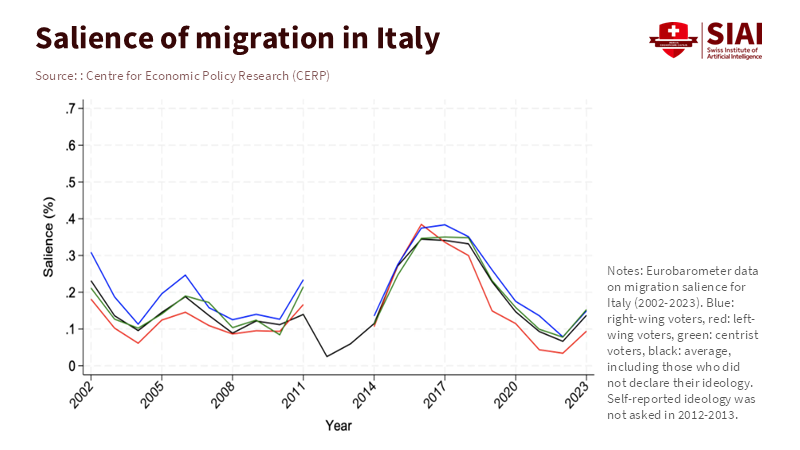
Economic Consequences: Outsourcing, Automation, and the Shifting Landscape of Manufacturing
The political choices that emerge from voting systems reverberate through economic decision-making processes. When anti-immigration platforms gain political influence, they frequently enact stricter border controls, impose limitations on labor mobility, and erect barriers to seasonal and migrant workers. These measures increase businesses' hiring costs. Within the diverse European economic landscape, where hourly labor costs range significantly—from low €10s in the Balkans to mid €40s in northern states—these policy shifts can alter the marginal calculations businesses make about production location and investment. The increased scarcity of labor and the added regulatory burdens enhance the relative attractiveness of outsourcing production to countries with lower labor costs, or of substituting labor with automation technologies and software.
Evidence of this economic calculus is already apparent. In recent years, the European manufacturing and automotive sectors have experienced significant job losses, driven by global competition, automation, and supply chain reconfiguration. Businesses seeking lower unit costs have been strategically shifting investment and production activities eastward or to locations outside of Europe. This trend presents a complex short-term dilemma for voters who support anti-immigration platforms: while there may be fewer foreign workers domestically, there may also be fewer local factory jobs as production migrates abroad. This creates a potentially contradictory political dynamic. Restrictive migration policies, enacted to preserve jobs, can inadvertently shrink local employment opportunities by raising input costs and reducing competitiveness. As a result, there is an increasing demand for automation and a faster transition to offshore factories in low-cost markets—responses that further diminish the domestic manufacturing footprint.
These decisions made at the firm level have broad implications, affecting the demand facing educators and the dynamics of local labor markets. The decline in manufacturing employment increases the need for retraining programs in sectors such as service, technology, and maintenance. It also accelerates the urgency for educational institutions to adapt their curricula to focus on digital and advanced manufacturing skills. Policymakers who concentrate solely on border controls risk overlooking this second-order effect: migration policies that disregard supply chains and cost pressures may inadvertently erode domestic jobs and exacerbate the very anxieties that political entrepreneurs exploit. Without appropriate corrective measures, the combined effect of certain electoral rules and restrictive migration policies can create a self-reinforcing downward spiral in domestic production capacity.
Recommendations for Educators, Administrators, and Policymakers
The complex interplay between electoral systems, migration politics, and economic restructuring requires carefully tailored responses from three key groups: educators who prepare the workforce, administrators who plan local economies, and policymakers who establish the rules governing both politics and business. First, educators must acknowledge a new reality: predictable fluctuations in local labor demand. Curricula should emphasize modular, stackable credentials that enable workers to transition rapidly between sectors—including basic digital literacy, machine maintenance fundamentals, and adaptable soft skills. By offering short, well-funded retraining pathways, educators can counter the political appeal of exclusionary promises by providing voters with plausible alternatives to job displacement. It is essential for schools and vocational centers to establish stronger connections with local businesses to ensure that training programs align with actual job openings rather than abstract projections.
Second, city and regional administrators must formulate industrial strategies that account for both foreign competition and shifting labor availability. Subsidies or tax incentives that overlook labor-cost differentials are likely to provide only temporary relief. Instead, policies should prioritize productivity enhancements that augment rather than replace labor, such as support for process innovation, supplier networks, and high-value after-sales services that are less susceptible to offshoring. Local authorities should also implement targeted migration policies to address specific skill shortages. Selective labor access can be designed to complement retraining initiatives and avoid the blunt trade-offs associated with blanket restrictions.
Third, policymakers must consider institutional reform as an economic instrument. Adjusting the rules that determine whether a plurality or a majority is required for victory is not merely a matter of constitutional fine-tuning; it can alter the political landscape. In settings where fragmentation and plurality incentivize narrow appeals, even well-intentioned industrial policies may struggle to gain traction. The introduction of runoff elections, the raising of thresholds for parliamentary representation, or other mechanisms that incentivize coalition-building can foster a more nuanced and pragmatic approach to immigration debates. This does not imply the elimination of political competition. Rather, it involves shaping incentives so that parties are encouraged to present coherent, economy-aware platforms rather than relying on single-issue populism. In many contexts, such reforms can be modest and targeted—adjustments to the electoral calendar, incentives for primary consolidation, or stricter rules governing post-election coalition formation—modifying behavior without undermining democratic legitimacy.
These interventions must be coupled with tangible economic support measures. When voters see evidence of credible retraining programs, locally anchored investments, and clear pathways to new employment opportunities, the urgency that fuels exclusionary politics diminishes. Reforming electoral incentives without parallel economic action risks simply shifting the focus of discontent to other pressing issues. The combination of political reform and pragmatic economic policy presents the best opportunity to reduce rent-seeking behavior related to migration and to reorient policymaking toward longer-term competitiveness objectives.
Integrating Institutional Factors with Practical Measures
The subtle distinction between plurality and majority rule can have a significant multiplier effect. It can amplify local grievances into national policy or encourage moderation and coalition-building. This institutional lever is consequential because the policies enacted as a result affect firm behavior, which, in turn, influences job availability and voter incentives. If the goal is for immigration debates to reflect the needs of businesses and demographic realities rather than the mechanics of vote aggregation, it is imperative to address both sides of the equation. Reform the rules that incentivize narrow interest groups. Invest in rapid retraining and productivity-enhancing local strategies. Use selective labor access to complement home-grown skill development. Only by addressing both political incentives and economic responses holistically can we prevent a cycle in which voters support restrictions that ultimately undermine the jobs they seek to protect. The choice is not between unfettered migration and isolationist policies; rather, it is between systems that encourage negotiation and systems that channel division into lasting harm. It is incumbent upon schools, businesses, and civic leaders to advocate for solutions that preserve jobs, sustain industry, and ensure the continued functionality of the political system.
The views expressed in this article are those of the author(s) and do not necessarily reflect the official position of the Swiss Institute of Artificial Intelligence (SIAI) or its affiliates.
References
Euronews. 2025. Labour costs across Europe: Where are they highest and lowest. Apr 19, 2025.
European Trade Union Confederation (ETUC). 2024. EU loses almost a million manufacturing jobs in just 4 years. Mar 18, 2024.
Eurostat. 2025. Businesses in the manufacturing sector - Statistics Explained.
Financial Times. 2026. Job losses in European car parts sector top 100,000 in two years. (news article).
Kevin Dano and Francesco Ferlenga. 2022. Evidence from French Elections (NBER working paper).
Wall Street Journal / ECB reporting. 2025. Chinese competition has led to job losses in eurozone manufacturing, ECB says.
Ethan McGowan is a Professor of AI/Finance and Legal Analytics at the Gordon School of Business, SIAI. Originally from the United Kingdom, he works at the frontier of AI applications in financial regulation and institutional strategy, advising on governance and legal frameworks for next-generation investment vehicles. McGowan plays a key role in SIAI’s expansion into global finance hubs, including oversight of the institute’s initiatives in the Middle East and its emerging hedge fund operations.