Foreign Threat Consolidation: From Kyiv to the Continent

Ethan McGowan is a Professor of AI/Finance and Legal Analytics at the Gordon School of Business, SIAI. Originally from the United Kingdom, he works at the frontier of AI applications in financial regulation and institutional strategy, advising on governance and legal frameworks for next-generation investment vehicles. McGowan plays a key role in SIAI’s expansion into global finance hubs, including oversight of the institute’s initiatives in the Middle East and its emerging hedge fund operations.
Input
Modified
Foreign threat consolidation is binding Ukraine—and now Europe—around credible defense
Budgets climb, conscription returns, and schools build civic resilience
Expect wider mandatory service soon—if paired with fair pathways and legal guardrails
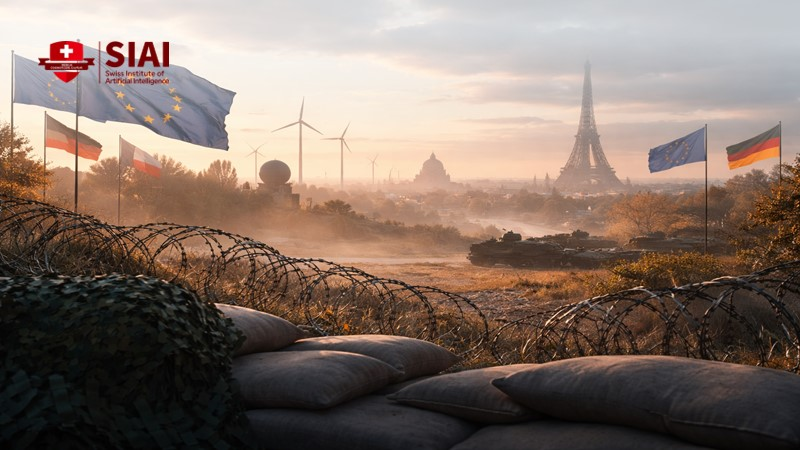
Fear of Russia's military power became the central force reshaping European politics starting in December 2025. Over two-thirds of Europeans doubted their country's ability to win in a direct conflict with Russia. This widespread anxiety has become the engine that is reordering everything in politics. Countries that once cut defense are now rebuilding their militaries. Formerly divided groups are mostly united. When people feel threatened, they stop arguing, trust leaders who promise protection, and ignore anyone seen as siding with the enemy. The war in Ukraine has demonstrated that security concerns are now spreading across Europe. If this trend continues, Western European countries will not only increase defense spending but may also reintroduce mandatory military service. This shift is driven by political factors as much as military ones. What began in Ukraine has become a continent-wide issue.
Why Threats Unite Us
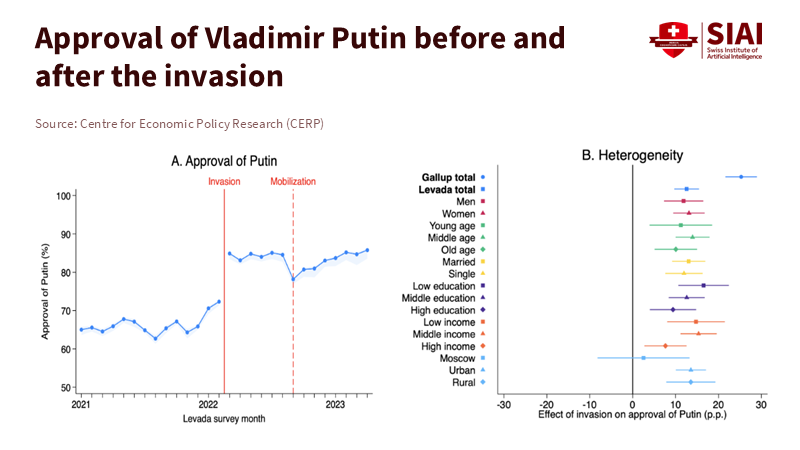
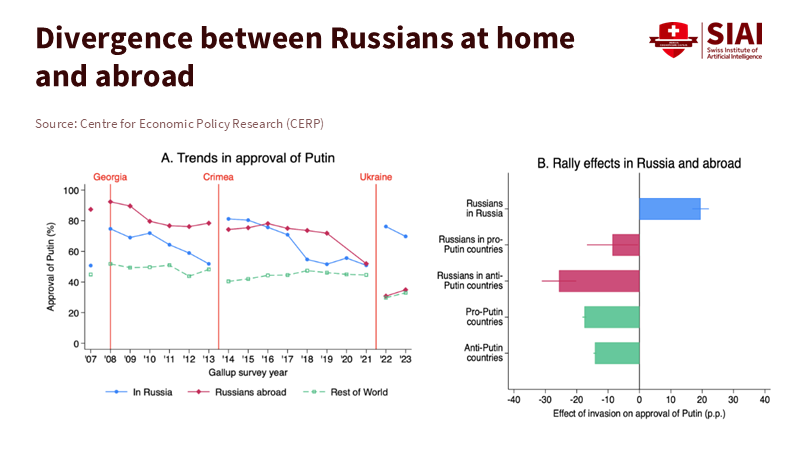
We often act as if being united as a country is a moral choice we make when things get tough. But it seems like there's something simpler going on. Threats make politics less complicated. It calms disagreements between parties, silences dissenters, and puts leaders in charge who can make promises to maintain order. Research shows this rally effect often occurs during crises. It can be stronger in countries with dictators. A study of what people in Russia think shows that when Russia invaded Ukraine, support for the government went up, and people started to dislike the West more. Approval rose, fewer people wanted to leave the country, and they had more negative views of the West.
Don't romanticize it; not everyone gets along. It's a normal response to danger, reinforced by government media control and the punishment of dissent. Foreign threats reshape structures, not just attitudes. This works elsewhere, including democracies, but there are limits. People unite more when threats feel close, obvious, and lasting. They trust groups that turn worry into protection. Those that can't, like parties or government agencies, lose trust.
Leaders should note this occurs only in certain conditions. Success isn't about winning; it's about appearing to mount a strong defense and excluding anyone aiding the enemy. Historically, foreign enemies have helped groups resolve disputes, unless the losing side joins them. Ukraine is a good example. People became more united in areas with organized resistance, and anyone who helped the enemy was caught and punished. But in places where leaders weren't sure what to do, or people didn't trust the government, the cracks remained. Now, the same situation is shaping politics across the board, from the Baltics to Spain.
Ukraine's Test: Unity, But Not Blindly
For the most part, Ukraine has become more united. You can see it in the numbers – in 2024, over 90% of people said they were proud to be Ukrainian, even in areas that used to be very different. People are also speaking Ukrainian more in their daily lives, in the media, and in government. This is how foreign threats unite people in real life: enemy violence accelerated a Ukrainian shift that began in 2014, merged it with the defense of the country, and left little room for doubt. Yet not everyone agrees. People are tiring of war. Some 2025 surveys found more openness to negotiations. Still, most Ukrainians want talks only with absolute Western security guarantees. Unity means trusting protectors, not just slogans.
Details matter for teachers and administrators who are teaching or managing things while under threat. In Ukraine's schools and universities, they're planning for continued operations even in the face of threats, conducting more civil defense drills, establishing backup testing locations, and using online learning. The lesson for politicians is clear: protect the schools, and learning can keep going. Fail, and even the best lessons fall apart. Leaders, too, should unite around real promises. Western training, air defenses, and offers of NATO membership do more to unite people than mere calls for sacrifice. That’s why Ukraine is resilient. Most Ukrainians want security guarantees with talks and feel more Ukrainian despite the war.
From Kyiv to Europe: Quietly Building Up
The war in Ukraine didn't just stay there. It changed how Europe sees risk. In 2014, only three NATO countries were spending at least 2% of their GDP on defense, which is what NATO wants. In 2025, NATO expects everyone to do it. It's not just talk; it's a commitment to spending that shapes planning, weapon procurement, and war preparation. The EU didn't use to be that involved in defense, but now it's funding factories. The Act in Support of Ammunition Production set a goal of making two million 155mm shells per year by the end of 2025. That goal brought in money from making gunpowder and explosives, as well as from assembling shells. It also gave factories a clear idea of what was needed.
Also, it's not just about traditional war. There's been a rise in sabotage, arson, and cyberattacks across Europe, which has strained police and intelligence services and forced them to work more closely together. This all has the same effect: fear makes people argue less and makes them more willing to support defense. People's opinions have changed, too. Europeans are still worried about war, but most of them now support a standard defense policy across the EU. The fear that started this whole thing – that countries can't beat Russia on their own – has been a significant factor in uniting people. It's pushing politics toward sharing defense resources, building up supplies, and practicing emergency response.
It's also changing military service. Denmark is now including women in mandatory conscription. Latvia reinstated mandatory service after suspending it for years. Sweden is increasing the number of people it conscripts and the responsibilities they face. Germany, which used to hate the idea of a draft, has started a voluntary service with the option to make it mandatory if not enough people sign up. None of this guarantees they'll be ready for war, but it's a change from the 1990s when everyone thought war was a thing of the past. In five years, much of Western Europe will likely have some form of mandatory or near-mandatory service, along with ways for people to serve in civilian roles and stronger reserve systems. The politics of consolidating foreign threats are pushing things in that direction.
What This Means for Policy: The Draft, Discussion, and Protecting Democracy
If foreign threat consolidation is what's driving things, then the main question for leaders is how to guide it. First, think of military service as a way to bring people together, not just as a means of getting more soldiers. Countries that have brought back service have done so in ways that give people options: shorter active duty for more people, flexible reserve duties, civilian service options in healthcare and infrastructure, and educational credits that connect service to opportunities. This matters in schools and universities. Student deferments should be predictable, short, and linked to study progress. Campus civil defense programs in first aid, evacuation, and cyber safety can meet requirements while allowing students to finish their degrees. Education authorities should adopt these now, not after a crisis.
Second, combine building up the military with education. Things aren't going to get easier anytime soon. Students in Europe are already dealing with airspace closures, sabotage threats, and propaganda. Modern education needs to teach media literacy, emergency communication, and the legal basics of how civilian and military groups work together. Teachers should be honest about the downsides. Military service has costs. But being prepared reduces those costs. When classrooms can switch to online learning quickly, when families know where to go in an emergency, when local governments have tested backup plans, the fear loses its power. Then, consolidating the foreign threat leads to genuine unity, not just panic.
It's important to listen to criticisms, too. Bringing back conscription can put people in the wrong jobs, hurt poorer kids more, and take away from education. Democracies need to plan for those risks. Keep service universal in theory but flexible in practice. Let science and nursing students serve in hospitals, not just on military bases. Pay people fairly. Give them certifications for their skills. Allow people to object to service for moral reasons, but require them to do real, challenging civilian work instead. Acceptance of service depends on governments proving their legitimacy and intent to protect. This readiness is what distinguishes democracies from dictatorships—building unity and resilience around consent, not force. Europe's policy must make this distinction front and center.
Third, make sure the numbers add up. Budgets have gone up, but inflation in weapons, salaries, and energy can eat up those gains. The solution is to invest in industry: longer-term contracts, common standards, and joint orders that enable companies to invest. The EU's ammunition plan is a good example. Education departments should do the same for resilience. Buy backup power and secure networks for schools. Train teachers in how to teach during a crisis. Fund local workshops that can switch from student projects to making spare parts in an emergency. These are small things that can have a big impact on morale. They reinforce the feeling that the system is ready – and that's what foreign threat consolidation is all about. When institutions seem prepared, people stay united.
One last thing: won't this turn into militarism? It doesn't have to. The same data that shows fear also shows Europeans supporting common defense, not going on the attack. The unity we're seeing today is about defense, following the law, and relying on alliances. Even in Ukraine, where people are sacrificing every day, the main thing they wanted in 2025 was security guarantees as a condition for any talks. That's not a call for endless war. It's a call for real peace. If teachers, administrators, and leaders focus on that goal – competence over talk and guarantees over empty promises – unity will last, and rights will remain protected. That's how a tough decade for security can strengthen, not weaken, Europe's democratic values.
The fact that most Europeans don't think their countries can beat Russia alone isn't a reason to give up. It's a reason to act. It explains why defense budgets have increased across the Alliance, why factories are making shells again, and why military service is back on the table in countries that swore it off. It also explains why schools, clinics, and city halls are now so crucial to strategy. Foreign threat consolidation isn't just a saying; it's a real phenomenon in society. It's what strengthened Ukraine's identity and led it to demand security guarantees. Now, it's pushing Europeans toward greater defense cooperation, restoring military service, and creating a new agreement between the government and its people. The choice isn't whether consolidation happens, but whether we shape it. Build institutions that earn trust. Include service in education and healthcare. Keep consent at the center. In five years, Europe can prevent aggression without becoming less free. That won't happen by accident. It will be built on purpose by leaders who understand why threats unite people – and how to make that unity serve a free society.
The views expressed in this article are those of the author(s) and do not necessarily reflect the official position of the Swiss Institute of Artificial Intelligence (SIAI) or its affiliates.
References
Associated Press. (2025). “Russia is trying to overwhelm Europe with its sabotage campaign, Western officials say.”
Denmark—Reuters. (2025). “Denmark expands mandatory military service to include women.”
European Commission. (2024). “Act in Support of Ammunition Production: €500 million to ramp up output to 2 million shells by end-2025.”
European Parliament Research Service. (2025). “Scaling up EU arms production capacity (EDIP, EDIRPA, ASAP).”
Euronews. (2025). “Over two-thirds of Europeans say their country cannot take Russia on militarily.”
KIIS / New Europe Center. (2025). “Foreign policy and security: Ukrainian societal attitudes—security guarantees and negotiations.”
Library of Congress (Global Legal Monitor). (2023). “Latvia: New law introduces compulsory military service starting January 2024.”
NATO. (2025). “Defence expenditures and NATO’s 2% commitment.”
Razumkov Centre. (2024). “The identity of Ukraine’s citizens: trends of change.”
Sweden—Reuters. (2025). “Sweden eyes extending military officers’ conscription age.”
Ethan McGowan is a Professor of AI/Finance and Legal Analytics at the Gordon School of Business, SIAI. Originally from the United Kingdom, he works at the frontier of AI applications in financial regulation and institutional strategy, advising on governance and legal frameworks for next-generation investment vehicles. McGowan plays a key role in SIAI’s expansion into global finance hubs, including oversight of the institute’s initiatives in the Middle East and its emerging hedge fund operations.