Truncated Supply Chains, Local Damage: Why Italy's Margin for Error Is Thinner

David O’Neill is a Professor of AI/Policy at the Gordon School of Business, SIAI, based in Switzerland. His work explores the intersection of AI, quantitative finance, and policy-oriented educational design, with particular attention to executive-level and institutional learning frameworks.
In addition to his academic role, he oversees the operational and financial administration of SIAI’s education programs in Europe, contributing to governance, compliance, and the integration of AI methodologies into policy and investment-oriented curricula.
Input
Modified
Supply bottlenecks cut euro-area output ~2.6%; Italy’s hit is larger
Foreign-input reliance and SME limits slow substitution, raising costs in factories and classrooms
Priorities: multi-sourcing, energy diversification, and digital tracking for public buyers and SMEs
One statistic tells it all: supply bottlenecks cut around 2.6% from euro-area industrial production in the year leading to September 2021, even before the energy crisis peaked. That's the global picture. The local impact, however, is sharper when disrupted supply chains meet an economy with fewer substitute options. Italy is in this situation. In 2024, detours in the Red Sea added up to two weeks to shipping times and reignited freight costs between Asia and Europe. This shock affected Italy's import-dependent manufacturing and its dense network of small firms. When transit times increase and supplies are delayed, Italy's costs rise faster while output adjusts more slowly. The global shock is widespread; the domestic fallout is different. This column argues that Italy's exposure is structural, not cyclical. Policy must shift from general "resilience" to a focused redesign that addresses Italy's substitution gap.
Truncated supply chains: the global shock, the local pain
The global situation is clear. Aftershocks from the pandemic, energy spikes from the war, and disruptions in logistics have tightened production networks. The European Central Bank estimated that bottlenecks alone reduced euro-area industrial output by about 2.6% in 2020-21, while ongoing energy and supply shocks pushed inflation into double digits by late 2022. In early 2024, attacks in the Red Sea forced ships to navigate around the Cape of Good Hope, leading to increased container costs and longer voyage times on routes between Asia and Europe. By mid-2024, rates fell as new capacity became available, only to rise again as demand surged. The key issue is not the volatility; it's the persistence. The cycle may change, but truncated supply chains remain a constant risk.
Italy's local reality fits within that global framework. Still, it diverges in essential details for educators, administrators, and policymakers. Gas price shocks hit hard because Italy sourced 43% of its gas imports from Russia in 2021. Firms dealt with price increases and passed them along where possible. When the Red Sea crisis occurred, longer lead times compounded problems in sectors already facing input shortages and high energy costs. National statistics reveal that imports in 2023 fell by 10.4% year-on-year—due to both energy price normalization and reduced imports—while business surveys indicated weaker orders and decreased capacity use in late 2024. Across the euro area, shipping disruptions were global; however, within Italy's factories and schools—where lab supplies, electronics, machine parts, and books need to arrive on time—they were local.
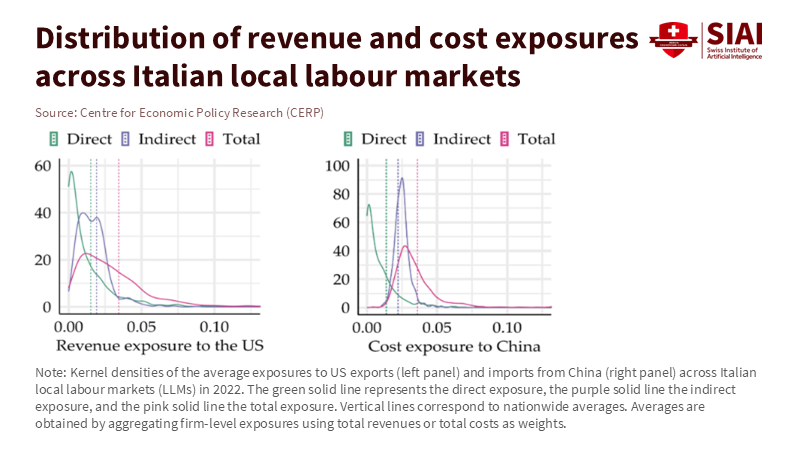
Italy's exposure is structural, not cyclical
At first glance, Italy's trade data do not seem fragile. The latest OECD TiVA report indicates that foreign content in Italy's exports was 20.7% in 2020, below the OECD average of 26.7%, suggesting a high level of domestic value addition. Yet the same data reveals a more relevant point for truncated supply chains: 62.2% of Italy's domestic manufacturing gross output relies on foreign inputs (Foreign Input Reliance, FIR), and 55.8% serves foreign clients (Foreign Market Reliance, FMR). The supply chain is extended in both directions. When links break, a significant portion of Italian production struggles to find quick substitutes. This reliance is not just a news story; it shows a system flaw.
Partnership patterns emphasize this issue. In terms of imports, Germany and China were Italy's top partners in 2020, making up about 14.1% and 9.1% of gross imports, respectively. In normal circumstances, this concentration can be efficient. However, during disruptions, it limits the pool of credible alternatives on short notice, especially when technical standards, certifications, or long-term supplier relationships keep firms tied. Italy's manufacturing specialties—machinery and equipment, fabricated metals, and advanced inputs for fashion and food processing—are rich in specialized knowledge and components: the more customized the component, the fewer alternatives there are.
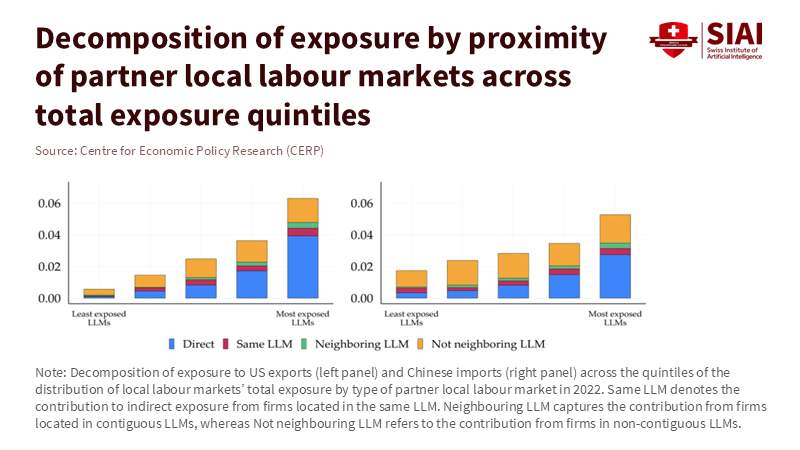
The micro-structure also magnifies the macro-exposure. Italy relies on over 4 million small and medium-sized enterprises (SMEs), the highest number in the EU. These firms generate over 65% of added value. Small businesses are flexible, but they usually have one or two trusted suppliers and limited working capital to stock up when freight times increase. In the Bank of Italy's 2022 survey, many manufacturers reported significant shortages of non-energy inputs, longer delivery times, and increased logistics costs. Most raised their prices, and a notable number cut their output. The digital tools that help larger firms track and diversify their suppliers—such as AI-supported forecasting, real-time shipment data, and automated ordering—are not widely used; only 8% of Italian firms used AI in 2024, far below the German rate. This illustrates the structure of Italy's exposure: concentrated partners in key inputs, lengthy global supply chains, and a firm-size distribution that slows substitution.
Policy for resilience: from diversification to redesign
For policymakers, the conclusion is straightforward: treat truncated supply chains as a design flaw, not just a random event. Italy cannot control disruptions in the Red Sea. It can shorten critical supply chains, expand its pool of suppliers, and improve the capacity of its firms and schools to adapt. Begin with targeted diversification across sectors vital to inputs (such as machinery components, chemicals, specialty steels, and lab equipment). TiVA data indicates where dependencies cluster; use this to identify alternative vendors within the EU and allied countries, and to cofinance multi-sourcing through support similar to export credit guarantees. At the same time, speed up the move away from imported gas, which heightened Italy's exposure in 2021-22. The European Commission has documented Italy's pre-war dependence on Russia (43% of its gas imports in 2021) and subsequent diversification efforts; solidifying this shift will help mitigate future logistics and price shocks.
Education and administration also require their own strategies. Universities, vocational schools, and research labs depend on timely supplies: reagents, sensors, chips, servers, and even paper. Procurement teams should map tier-1 and tier-2 suppliers, set up "must-arrive" lists for each term, and maintain minimum stock levels for those items. They should adopt digital order tracking and simple predictive tools (no need to wait for exhaustive AI) to monitor lead times and switch to pre-approved alternatives. Public buyers can support domestic or EU-based suppliers by using performance-based criteria rather than broad "local content" rules that increase costs without ensuring reliability. Finally, fund digital upgrades to help SMEs manage supply chains and contracts; the adoption gap is evident in ISTAT's 2024-25 findings and undermines resilience.
Anticipating objections—and the costs of inaction
An objection might be that Italy has shown resilience: exports performed better than expected, and in 2022, exports of authentic goods even exceeded potential foreign demand by about 0.5 percentage points. This is true and significant. However, this aggregate performance hides the pressure on margins, delayed deliveries, and project postponements that many firms have reported. The Bank of Italy's analysis shows that most affected firms raised their prices; some reduced output; others lowered margins and implemented energy-saving measures. By late 2024, surveys indicated weaker orders and decreased manufacturing utilization. Resilience exists, but it does not negate the central point: when supply chain disruptions affect Italy, the local impact is greater than the global average because structural constraints slow the ability to find substitutes.
Another objection is that the global decrease in freight rates by mid-2024 "shows" the problem has been resolved. However, logistics in 2024-25 fluctuated with geopolitical factors and capacity changes: rates dropped when new ships entered service, increased with new risks, and then softened again. ECB reports track this volatility while outlets like the Financial Times detail the penalties from the Red Sea incident. Designing policy based on "average" shipping costs overlooks the tail risks that significantly impact educational schedules and production cycles. The correct measure is not a quarterly average rate; it's the cost of missing a delivery for a crucial class or export order. That cost is local and is felt more often when substitution options are limited.
The argument is straightforward. Global supply shocks will keep occurring. Truncated supply chains turn these shocks into local damage when countries cannot quickly switch suppliers, transport routes, or inputs. Italy's structure—heavy reliance on foreign inputs in manufacturing, concentrated partnerships in critical areas, a vast base of SMEs with uneven digital resources, and recent procurement struggles—gives it less margin for error than larger, more integrated peers. We do not need another crisis to act. Use the TiVA data to identify vulnerable areas and pre-qualify alternatives. Secure the post-2022 energy diversification. Invest in tools to improve supply chain visibility for SMEs and public buyers, enabling them to detect delays early. Build up minimum stocks for essential supplies in schools and labs. Lastly, keep policy focused on design: contracts for multi-sourcing, compatible standards, and agile procurement rules that prioritize reliability over the illusion of the cheapest option. The global shock is inevitable; we can reduce the local damage by redesigning the system before the next crisis hits.
The views expressed in this article are those of the author(s) and do not necessarily reflect the official position of the Swiss Institute of Artificial Intelligence (SIAI) or its affiliates.
References
Bank of Italy. Economic Bulletin, Issue 4/2023. Rome: Banca d'Italia, 2023.
Bank of Italy. Corsello, F., Quantity versus price dynamics: the role of energy and bottlenecks in the Italian industrial sector (QEF 781/2023). Rome: Banca d'Italia, 2023.
European Central Bank. Economic Bulletin, Issue 3/2024. Frankfurt am Main: ECB, 2024.
European Central Bank. Economic Bulletin, Issue 5/2024. Frankfurt am Main: ECB, 2024.
European Central Bank. Economic Bulletin, Issue 7/2024. Frankfurt am Main: ECB, 2024.
European Central Bank. "Sources of supply chain disruptions and their impact on euro area output." Economic Bulletin Box, 2021/08.
European Commission. Country Report – Italy 2023. Brussels: European Commission, 2023.
Financial Times. "Red Sea crisis causes surge in container ship costs, warns CMA CGM." London: FT, 2024.
ISTAT. "Foreign trade and import prices — December 2023." Rome: ISTAT, 2024.
ISTAT. Business and Consumer Surveys — November 2024 Note. Rome: ISTAT, 2024.
OECD. ICIO-TiVA Highlights: GVC Indicators for Italy (2023 Release). Paris: OECD, 2023.
Reuters. "Just 8% of Italian enterprises using AI, many people lack digital know-how." Reuters, 2025.
David O’Neill is a Professor of AI/Policy at the Gordon School of Business, SIAI, based in Switzerland. His work explores the intersection of AI, quantitative finance, and policy-oriented educational design, with particular attention to executive-level and institutional learning frameworks.
In addition to his academic role, he oversees the operational and financial administration of SIAI’s education programs in Europe, contributing to governance, compliance, and the integration of AI methodologies into policy and investment-oriented curricula.