Executive AI Brief


AI can create task-specific “superhuman productivity,” sharply compressing the time required for some knowledge work without implying that one person can replace ten complete jobs he fiscal risk is less an immediate collapse of government revenue than a gradual shift from broadly taxed labour income toward concentrated profits, capital income and economic rents Because those gains are more mobile across borders than payroll, governments will need stronger capital-income taxation, better measurement and international coordination rather than a blunt tax on AI itself
Read More
AI can accelerate biological research, diagnosis, prevention and care, raising the prospect of longer and healthier lives Its nearer-term labour effect may be unequal augmentation: a small group becomes dramatically more productive while others lose bargaining power or move into lower-quality work Because work, income, wealth and access shape health, AI could widen longevity inequality unless its productivity and medical dividends are deliberately shared
Read More
AI is moving from a low-cost software experiment to a metered production input whose bill rises with use Cheaper tokens do not guarantee lower spending: agents, context, tools, and repeated inference can expand consumption faster than unit prices fall The automation threshold is crossed when AI becomes cheaper, more predictable, and sufficiently reliable at the task level—not merely when a model can perform the task
Read More
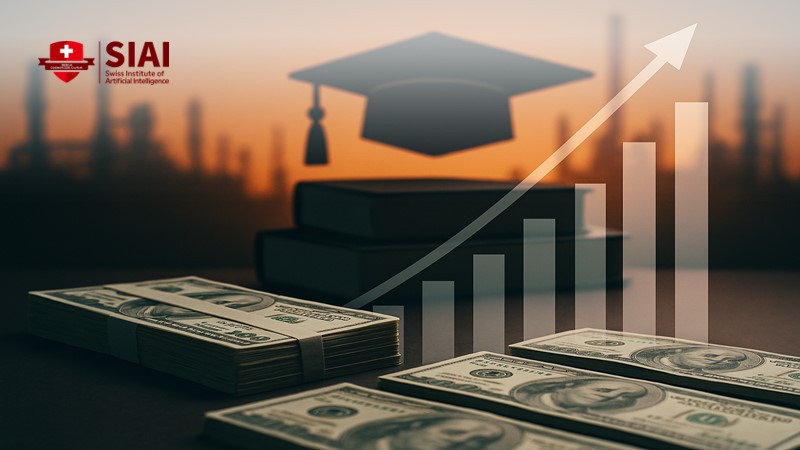
India growth momentum is strong, but its durability depends on education reform Investment gains will fade unless skills systems scale with industry demand The real test is whether growth becomes long-term capability India is in
Read More






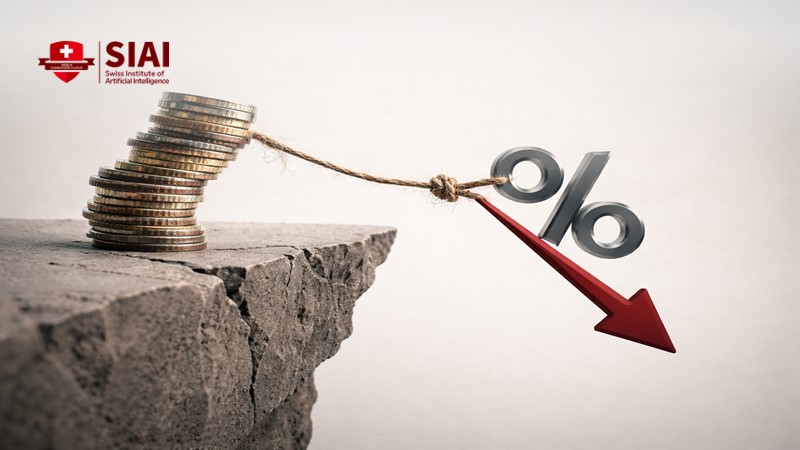
High public debt is weakening the power of the zero lower bound in Europe When fiscal credibility erodes, lower interest rates no longer guarantee stronger growth or stable inflation Europe must rebuild fiscal space and institutional trust if monetary policy is to work again
Read More
Europe’s AI gap is not about technology — it is about weak hands-on use at work Productivity gains come from daily tool use, not from policy frameworks alone Without faster workplace adoption, Europe will fall further behind global peers
Read More

Housing wealth losses are squeezing education budgets Cuts hit “extras” first, widening gaps fast Schools need funding buffers and lower pressure According to research, a 10% change in home values can predict a 1.6% change i
Read More
Trump’s tariffs are driving factories and capital from China into Southeast Asia ASEAN is gaining ground in high-tech exports and global manufacturing Education and skills will decide whether this shift creates lasting, quality jobs
Read More
Asian subsidies—especially in steel—distort prices and trade Make subsidies conditional on training and shared curricula Compete on skills to cut tariffs and lift productivity Two numbers tell the story
Read More
Big firms helped drive the 2021–2022 inflation surge Granular data links market power and inflation Policy and teaching must reflect this granular reality In late 2022, inflation in the euro area reached a peak of 10.6%.
Read More

U.S. spin-off narrows feeds Students lose global views Mandate diversity metrics, open datasets TikTok reaches millions of Americans every day, and a significant number are students. In 2024, Pew found that 58% of U.S.
Read More
Schools must plan for digital money resilience as payments go cashless Keep layered rails—fast digital by default, cash and offline modes for outages Pilot CBDC/stablecoin use with strict safeguards, contracts, and treasury diversification
Read More

Climate finance must fund people, not just projects Put Pacific climate education at the center Tie every grant to learning-days and local ownership In a year when the oceans in the South-West Pa
Read More
Climate spillover costs spread climate damage across borders and supply chains, not just disaster zones Standard models miss these externalities, so budgets and prices understate true risk Measure and price spillovers to fund resilience in education and public services now
Read More
Families insure children’s income shocks—cash for short hits, saving for long ones In ageing, low-growth countries, this scales nationally: Japan’s seniors work longer to steady households Policy fix: public “reinsurance” via income-linked tuition, midlife upskilling, and flexible senior roles in education
Read More
Reciprocal tariffs face a Supreme Court test over presidential authority They raise import prices, squeezing school budgets and families Targeted trade tools and smarter procurement beat blanket tariffs T
Read More
Japan rearms as Russia–China aligns ASEAN trusts Tokyo yet wants guardrails Education builds consent via maritime literacy The key number is 66.8.
Read More